

Have you ever wondered if a speaker could change your whole home sound setup? Apple's smart speakers get people talking with their bold looks and smooth connections. They pump out clear, room-filling sound that we could truly feel. We tested both the HomePod and HomePod mini, and each fits different budgets and room sizes. Their slim design packs powerful tech that listens and reacts to your voice, making every command feel as natural as chatting with a friend. This mix of clean style, solid performance, and smart controls could change how you listen to music and run your home devices. It's a small speaker with a big impact.
Apple Smart Speakers Overview: HomePod and HomePod mini
Apple offers two smart speakers that fit different needs. The 2nd-generation HomePod costs about $300. It has a sleek cylindrical mesh design and runs on the Apple S7 chip. It also has temperature and humidity sensors (which measure the room’s climate) and supports spatial audio (sound that feels 3D) along with Matter protocol for smart home devices. A four-microphone setup helps Siri pick up voices from up to six people. Its handoff feature lets you easily switch audio from a nearby iPhone. Although it works only with HomeKit and AirPlay, its 87.2 dB output fills most rooms with clear sound.
The HomePod mini is a smaller option priced around $99. Its compact, round design fits well in any room. It uses a full-range driver paired with dual passive radiators to offer balanced sound for everyday listening. It also has a four-microphone array and uses the U1 chip to boost its handoff features. Many users even set it up as a hub to control other smart devices. Its design focuses on ease of use with iOS, while keeping all the smart features you need.
Together, these speakers give you real choices. One brings detailed, room-filling sound and smart sensors, while the other offers a budget-friendly, compact option that still controls your smart home. Have you ever noticed how a simple design can make tech feel more real? That's Apple's blend of style, performance, and smart connectivity in everyday audio.
apple smart speakers: Dynamic sound that excites
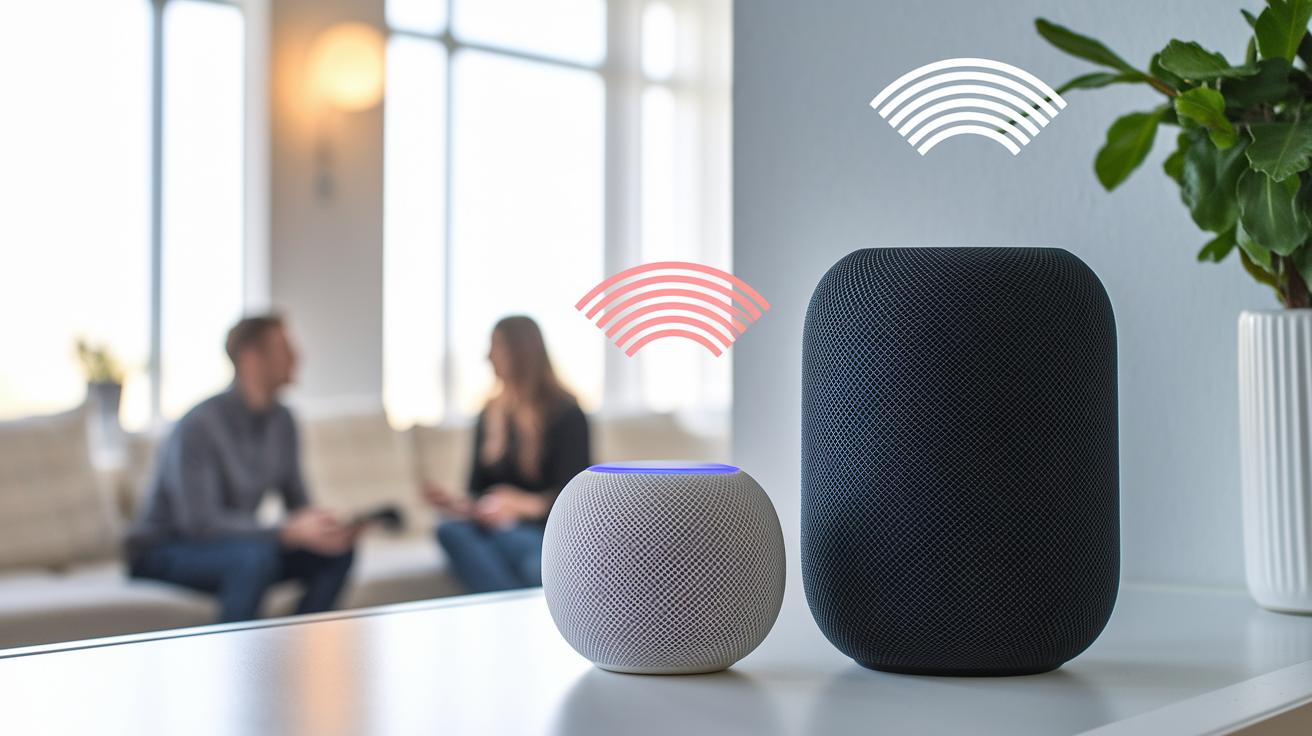
The HomePod has seven upward-firing tweeters that use beamforming (directing sound to a specific spot) to fill your room with sound. A 4-inch woofer works with these tweeters to create a rich, full-range audio experience. It also supports spatial audio and Dolby Atmos, which means the sound feels deep and real. Its peak output is 87.2 dB, which is good but a bit lower than the Echo Studio at 94.1 dB or the Sonos One SL at 89.6 dB.
The HomePod mini takes a different approach with one full-range driver supported by dual passive radiators. This design targets balanced sound for smaller spaces, though it doesn’t deliver the same deep bass as the larger model. Its small, globe shape stands apart from the HomePod’s cylindrical mesh design, giving you more style choices for placing speakers around your home. The smooth mesh cover not only boosts its modern look but also helps with sound quality.
Both speakers are built to meet the high standards of smart voice devices. The HomePod’s advanced design makes it a strong choice for playing detailed, complex tracks. Meanwhile, the HomePod mini, though simpler, still offers clear, quality sound in a compact design that fits easily into any setup.
Siri and Smart Features in Apple Smart Speakers
Apple’s smart speakers come loaded with handy voice features. They have two built-in "Hey Siri" microphones that pick up your voice from anywhere in the room. Siri can tell apart up to six different voices, so each person gets custom answers. You can ask it to play music, start your favorite podcast, set a timer, or control your HomeKit devices using everyday language.
The HomePod mini includes a special chip called U1 that lets you easily hand off audio from a nearby iPhone. It also has sensors that check temperature and humidity, giving you real-time room data that can help adjust your environment bit by bit. Plus, pairing it with an Apple TV turns your speaker into a key part of a surround sound setup for movie nights.
It also supports Matter and HomeKit for extra home automation features via Smart Home Automation. While Siri may sometimes pass tougher questions to web searches and stick with a few third-party streaming services, its blend of smart voice control and personal touches makes these speakers a solid hub for your connected home.
apple smart speakers: Dynamic sound that excites
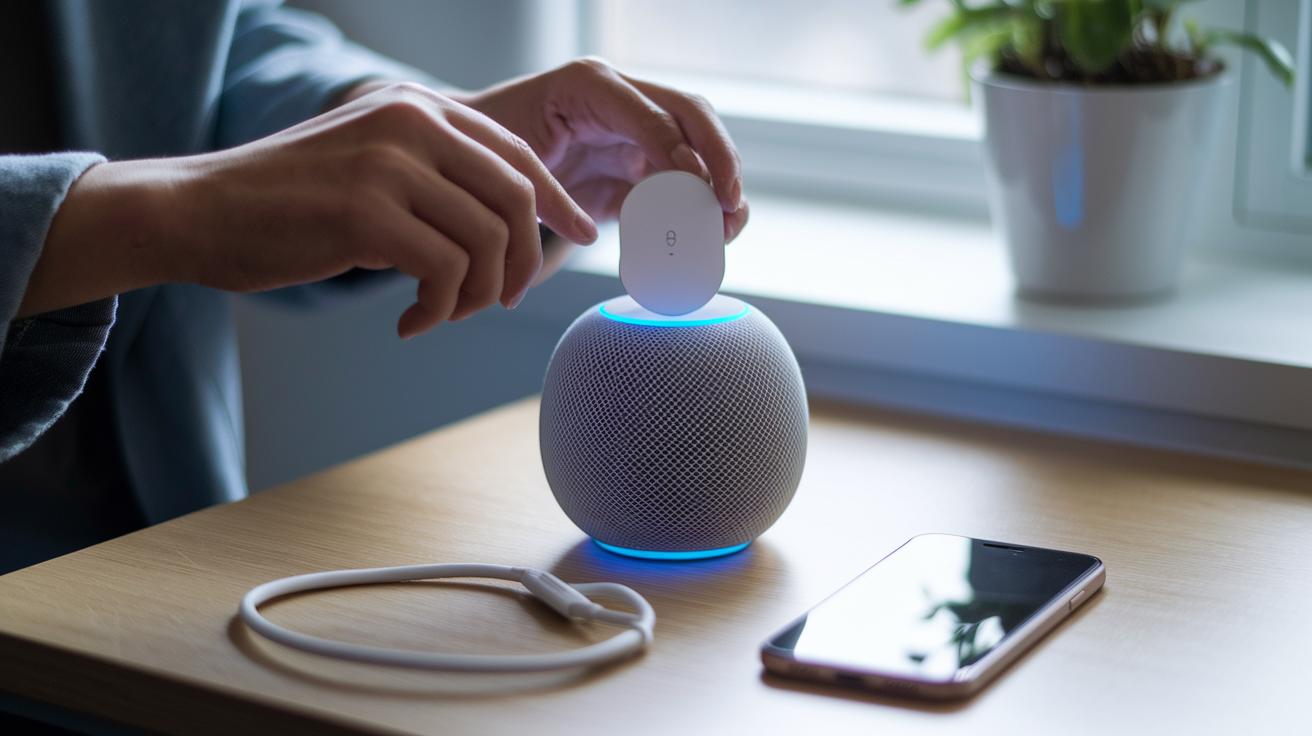
Setting up your HomePod or HomePod mini is super simple. In just a few steps, you can hook it up with your Apple devices and HomeKit accessories for a smooth smart home experience.
- Update your iPhone or iPad to the latest iOS.
- Plug in the speaker and wait until you see the light.
- Bring your iOS device close and follow the on-screen instructions.
- Turn on personal requests and voice recognition.
- Choose a room for the speaker in the Home app.
- Set up multiroom or stereo pairing if you want.
Once you finish these steps, your speaker is ready to serve as the hub of your smart home. AirPlay over Wi-Fi takes care of the details, so you don’t need to fiddle with settings. If you have a HomePod mini, it automatically takes on the hub role, making it easy to manage other HomeKit devices. Keep your iOS updated for the best performance, then sit back and enjoy hands-free control with Siri and a connected home that just works.
Comparing Apple Smart Speakers to Other Smart Audio Devices
We've looked at Apple's smart speakers and compared them to other top audio options. Apple's devices work hand in hand with HomeKit and let you use Siri with ease. On the other hand, the Echo Studio and Sonos Era 300 have their own strengths. The Echo Studio is made for louder rooms with its high volume and Dolby Atmos support for a more immersive feel. The Sonos Era 300 is a good pick if you want broad service integration and easy connectivity with multiple devices. Check out the comparison below to see how each option fits different needs.
| Model | Price | Max Volume (dB) | Key Features | Connectivity | Voice Assistant |
|---|---|---|---|---|---|
| HomePod (2nd-gen) | $299 | 87.2 | Spatial audio, sensors, beamforming | HomeKit, AirPlay | Siri |
| HomePod mini | $99 | ~80 | Compact design, balanced sound, hub function | HomeKit, AirPlay | Siri |
| Amazon Echo Studio | $220 | 94.1 | Dolby Atmos support, multi-driver array | Alexa, Wi-Fi, Bluetooth | Alexa |
| Sonos Era 300 | $479 | 90 | Broad service integration, immersive sound | Wi-Fi, Ethernet | Voice integration via Sonos |
The HomePod (2nd-gen) stands out with its tight integration with HomeKit and clear voice commands using Siri. Its beamforming design helps deliver crisp sound. Meanwhile, the HomePod mini is a great choice for small spaces, offering a balanced sound and serving as a smart home hub.
For those needing more power, the Echo Studio is built for larger rooms. Its high volume and Dolby Atmos support fill the space with immersive sound. If you value a wide range of services and multi-device connectivity, the Sonos Era 300 might fit your setup, even though it comes with a higher price.
Each smart speaker has a unique appeal. Consider your room size, your hub needs, and what streaming services you use before making a pick.
Pricing, Value, and Purchasing Options for Apple Smart Speakers
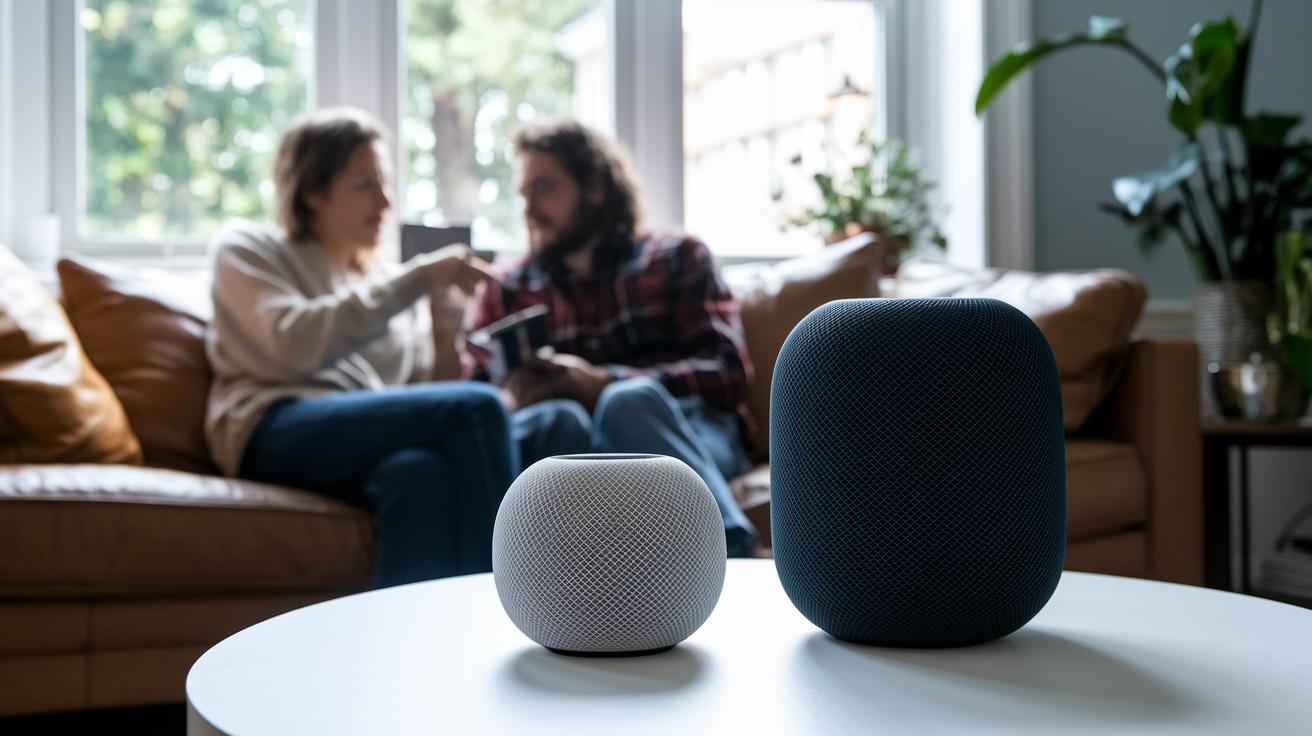
The HomePod (2nd-gen) is priced at $299. It works well if you want rich sound and smart home features like spatial audio, many sensors, and smooth HomeKit integration. You get what you pay for with this unit.
On the flip side, the HomePod mini is a great pick for those on a budget at just $99. It fills small spaces with clear sound and can act as a smart hub for your home. If saving even more dollars is the goal, refurbished HomePod minis run at about $65, offering the essential smart features without the brand-new price.
Think about what matters most to you when choosing. The HomePod (2nd-gen) has top-notch build quality and extra features, while the mini is built for everyday use in smaller settings. You can grab these speakers at the Apple Store or from selected third-party shops. Price cuts are uncommon, so expect stable pricing.
When you line these up with other brands, like the Echo Studio for $220 or the Sonos Era 300 for $479, Apple's offerings serve different needs. The HomePod excels with deeper smart home control, while the mini is designed for a simple, affordable experience in compact rooms.
Future Outlook and Software Updates for Apple Smart Speakers
Upcoming firmware updates should boost Matter (a smart home protocol) support and extend HomeKit device compatibility for Apple’s smart speakers. This means you might soon hear richer, more natural sounds during music, movies, and regular voice commands. Siri is expected to pick up the pace too, with quicker command recognition and improved accuracy for all users.
We don’t have a set timeline yet, but past upgrades offer hints. The original HomePod got big improvements in 2018, the HomePod mini received key updates in 2020, and the 2nd-generation HomePod launched with fresh features in 2023. Rumors suggest that Apple might also roll out clearer dialogue, more balanced sound, and easier sync with HomeKit accessories.
Some industry forecasts also point to new innovations that could change how we use smart speakers every day. These updates aim to give users more control and elevate sound quality, keeping Apple’s smart speakers competitive in a fast-changing tech world. Future updates may even redefine our everyday interactions with sound and smart home devices.
Final Words
In the action, our review walked through apple smart speakers, from the 2nd-generation HomePod to the HomePod mini. We covered design, sound quality, Siri features, setup ease, and how they compare with other audio devices. Each speaker shows strengths in smart home control, audio performance, and value. We also touched on pricing options and future software updates. This clear breakdown should help you match your needs with the right device. Happy listening and smart buying!
FAQ
Q: What are Apple smart speakers called and which models are available?
A: Apple’s smart speakers are branded as HomePod. Today, the lineup includes the HomePod (2nd-gen) at around $300 and the HomePod mini at about $99.
Q: Which Apple smart speaker is considered best?
A: The best choice depends on your space. The HomePod (2nd-gen) offers powerful sound for larger rooms, while the HomePod mini works well in smaller spaces and doubles as a smart home hub.
Q: Do Apple smart speakers support Bluetooth or include screens?
A: Apple smart speakers are built for AirPlay connectivity and do not use Bluetooth or include built-in screens, keeping the design simple and focused on audio performance.
Q: Why did Apple discontinue older HomePod models?
A: Apple discontinued earlier HomePod versions to refine its focus on devices that integrate seamlessly with its ecosystem, making way for the current HomePod and HomePod mini models.
Q: Is there a monthly fee for using Apple HomePods?
A: There is no monthly fee for Apple HomePods. Once you purchase the device, you can use all of its core features without any recurring costs.
Q: Is an Apple HomePod 3 expected?
A: Currently, Apple offers only the HomePod (2nd-gen) and HomePod mini. There is no official announcement about a HomePod 3 at this time.