

Have you ever wondered which phone sparked a design change? In 2011, the Samsung Note series kicked things off. Each new Note built on the old one, adding clever upgrades that changed what smartphones can do. The very first Note came with an active stylus (a pen you can use with your screen), while later models introduced fast charging and better security. Innovation took center stage with every release, and the series set the stage for many of the features we now expect in our phones. This journey from early ideas to modern tech shows how smart design can change an entire industry.
Samsung Note Series List: Iconic Model Timeline
Here’s a clear timeline of the Galaxy Note series. Each model is listed with its release year and key features so you can see how the series grew from its 2011 start to the more advanced Note 20 series in 2020. You can see the evolution from early active stylus technology to faster charging and better biometric features.
| Model | Release Year | Key Specifications |
|---|---|---|
| Original Galaxy Note | 2011 | 5.3″ display, 256-level active digitizer, Snapdragon 800 2.3 GHz (LTE) / Exynos 5 Octa 1.9 GHz (3G) |
| Galaxy Note II | 2012 | 5.5″ 16:9 display, split-screen multitasking; sold over 3 million units in two months |
| Galaxy Note 3 | 2013 | 5.7″ FHD display, 3,200 mAh battery, 4K video, 13 MP camera, USB 3.0 |
| Galaxy Note 3 Neo | 2014 | Budget alternative with refined design |
| Galaxy Note 4 | 2014 | 5.7″ QHD Super AMOLED, Adaptive Fast Charging, fingerprint sensor, IR blaster, heart-rate sensor, Gear VR |
| Galaxy Note Edge | 2014 | Curved-edge display design |
| Galaxy Note 5 | 2015 | Glass-metal build, curved back, spring-loaded S Pen |
| Galaxy Note 7 | 2016 | USB-C, IP68 rating, iris scanner; later known for a battery recall and Note FE relaunch |
| Galaxy Note 8 | 2017 | Dual-lens camera, reduced battery capacity for better safety |
| Galaxy Note 9 | 2018 | Up to 8 GB RAM, 512 GB storage, rechargeable S Pen |
| Galaxy Note 10 & Note 10+ | 2019 | Infinity-O display available in two sizes |
| Galaxy Note 20 series | 2020 | Bold redesign, improved S Pen response time, three-generation Android support |
Samsung Note Series List: Design and Display Evolution
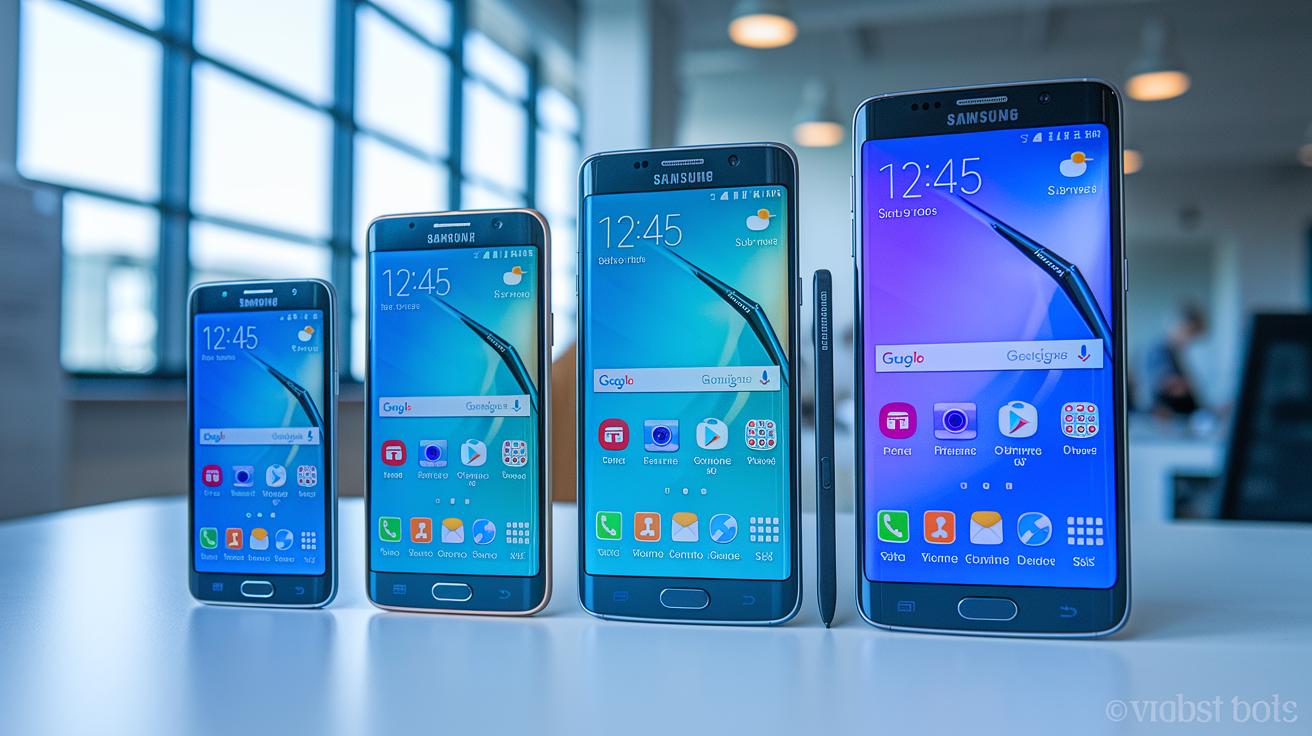
Samsung set a new standard for smartphones right from the start. The first Note came with a 5.3-inch Super AMOLED screen and a basic S Pen that sensed 256 levels of pressure. Later models bumped up the size to 6.8 inches with advanced Optic AMOLED technology. This upgrade brings richer colors and crisper details, paving the way for the displays we see today.
The S Pen also grew more capable over time. The original version offered steady pressure sensitivity, while newer models come with Bluetooth and rechargeable features. Now, the S Pen even lets you control your photo shutter from a distance. Each generation builds on the last to add smart features and better design.
Samsung also changed the phone’s look. They moved from using faux leather backs to a sleek, curved glass-metal body that feels comfortable and modern. The Note Edge, with its single curved screen edge, opened new ways to interact with the device. Think about unlocking a phone that showcases bright images and fits perfectly in your hand. It’s design that works with you every day.
This step-by-step evolution in display and stylus design shows Samsung's commitment to blending style with smart, everyday functions.
Samsung Note Series List: Core Feature Milestones
The Galaxy Note series earned its name by steadily improving its key features like cameras, battery life, security, charging, and connectivity. Early on, the Galaxy Note 3 came with a 13 MP camera that set new standards for mobile photography. Later, the Note 8 introduced a dual-lens setup that gave users more flexibility and sharper photos.
Battery power saw big changes over the years too. The early models used a 3,200 mAh battery. Newer ones increased this to around 4,500 mAh, which helped run larger screens and faster processors without needing a charge as quickly.
Security also got a boost. The Galaxy Note 4 was one of the first to include a fingerprint sensor. Then, the Note 7 experimented with an iris scanner, which was promising until some issues came up. By the time the Galaxy Note 9 arrived, face unlock was added for fast and reliable security in daily use.
Charging and connectivity kept up with the times as well. The series moved from using Adaptive Fast Charging to embracing USB-C fast-charge and even wireless charging options. And while earlier models relied on 4G LTE, the latest Note 20 series supports 5G, showing off a modern suite of upgrades.
Samsung Note Series List: Release Timeline and Regional Launches

Samsung kicked off its Note series in October 2011 with the Original Galaxy Note. It launched in South Korea first and then made its way to the US and Europe. This early rollout set the stage for future, phased launches.
In 2012, the Galaxy Note II came out. Samsung focused on key markets like India and the Philippines with a staggered release that built real momentum.
The Galaxy Note 3 arrived in 2013, debuting in South Korea in early fall before moving into other international zones. As each model rolled out, Samsung refined its global schedule to match local needs.
In 2014, models like the Galaxy Note 4 and Note Edge launched together in major markets. This synchronized approach showed Samsung’s commitment to reaching diverse regions quickly. Later, the Note FE released in late 2016 served as a mid-cycle update that helped ease supply chain issues.
The Galaxy Note 8 (2017) and Note 9 (2018) followed a similar rollout plan, with localized launch dates that kept promotional impact high. Keeping the routine, the Galaxy Note 10 series came out in 2019, and the Note 20 series, with its bold redesign, launched in August 2020. These releases highlight how Samsung blends new features with smart, region-focused plans.
Samsung Note Series List: Pricing Trends and Market Variations
Samsung has steadily raised the price of their Note series as new features come along. The first Note started at around $699. Each new generation saw an increase of about $100 to $200. For example, the Note 20 Ultra launched with a price near $1,449, reflecting the added features and improvements.
Prices also vary by region. In the USA, phones often launch at a higher price due to carrier deals and strong market demand. In India, the starting price is usually a bit lower. The Philippines tends to fall between these two, offering a balance of cost and features.
Key points:
- Unlocked models usually cost more than carrier-locked versions because they have no contractual ties.
- Prices tend to drop predictably after launch, with steady discounts over the first few months.
- Higher prices are linked to enhancements like better displays, improved S Pen features, and stronger security tools.
Samsung’s pricing approach reflects both increased production costs and the value added by new features. The consistent $100–$200 jump helps make sure that every upgrade feels like a smart choice for users in different markets.
Samsung Note Series List: In-Depth Comparison of Note 10 & Note 20
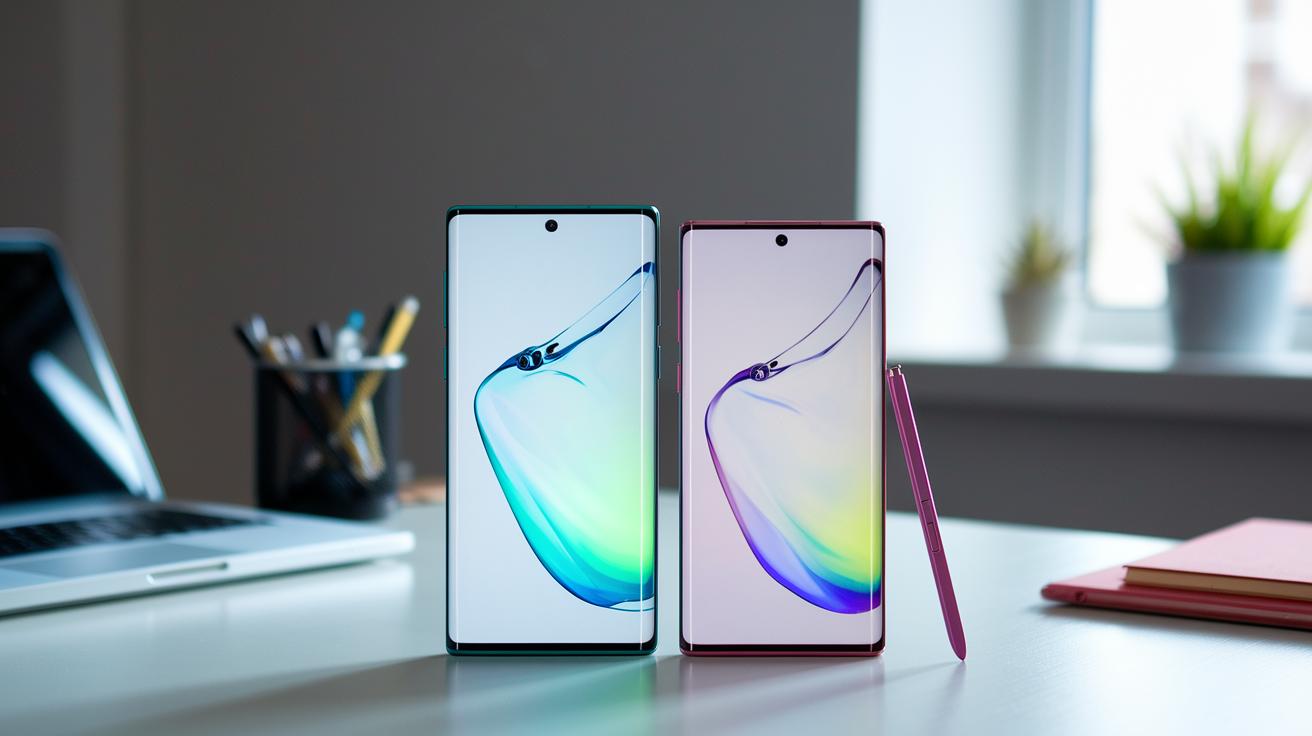
Samsung's Note series has something for everyone. The Note 10 and Note 10+ focus on how size can change your experience. The 6.3-inch Note 10 works well for everyday use, while the bigger 6.8-inch Note 10+ adds a microSD slot (extra memory), a larger battery, and another camera lens for more photo options.
The Note 20 series steps things up with better connections and media features. The Note 20 gives you steady, balanced performance for daily tasks. The Note 20 Ultra goes further with a 6.9-inch screen, a quicker S Pen (a stylus that responds fast), a top camera setup, 5G support, and longer Android updates.
| Model | Display | microSD | Battery & Camera | Highlights |
|---|---|---|---|---|
| Note 10 | 6.3 inches | No | Standard battery, fewer camera lenses | Sleek design, efficient performance |
| Note 10+ | 6.8 inches | Yes | Larger battery, additional camera lens | Enhanced media and multitasking |
| Note 20 | Approx. 6.7 inches | Not specified | Reliable battery and camera setup | Solid overall performance |
| Note 20 Ultra | 6.9 inches | Not specified | Top-tier battery and premium camera array | Faster S Pen, 5G, extended Android support |
Think of it like picking between two adventure backpacks. One has extra pockets for your gear, while the other offers more comfort and durability. Picture capturing important moments with a fast S Pen and the power of solid 5G support.
Final Words
In the action, we broke down every stage of the Galaxy Note evolution. We charted design shifts, display upgrades, and core feature improvements, from screen size changes to battery boosters and security steps.
The article gave a clear samsung note series list that highlights each model's advances, pricing trends, and release dates. This guide helps you see the trend in innovation and make a confident device choice. Happy device hunting!
FAQ
Q: What is included in the Samsung Note series list with pictures and price?
A: The Samsung Note series list with pictures and price shows models arranged in order, highlighting key design elements, specs, and launch costs to help users compare different devices quickly.
Q: What details are provided about the Samsung Note 20?
A: The Samsung Note 20 overview covers its bold redesign, improved S Pen responsiveness, and support for modern Android versions, making it a standout in the Note lineup.
Q: What specific features are highlighted for the Samsung Note 13 and Samsung Note 12?
A: The Samsung Note 13 and Note 12 entries emphasize incremental design updates and improved productivity features, showing clear steps in the series’ evolution.
Q: What information is available on the Samsung Note 22 in the list?
A: The Samsung Note 22 details include advanced display technology and enhanced performance, indicating its role as one of the latest entries in the productivity-focused series.
Q: How many Note series devices has Samsung released?
A: The list shows that Samsung has released over a dozen Note devices since 2011, reflecting a long history of innovation in large-screen, productivity-focused smartphones.
Q: Is the Samsung Note 20 the last Note series phone or is there a Galaxy Note 23?
A: The Samsung Note 20 is not the last in the series. While a Galaxy Note 23 has not been officially announced, future models are likely to continue the Note legacy.
Q: What are the key highlights of the Samsung Galaxy Note 7?
A: The Samsung Galaxy Note 7 is noted for its sleek design, USB-C charging, and high-tech features, though it is also remembered for its battery recall issues.
Q: What does the term Samsung Galaxy Note refer to in the lineup?
A: The term Samsung Galaxy Note refers to a family of devices known for large displays and integrated S Pen capabilities, designed to boost productivity and creativity.
Q: What distinguishes earlier models like the Samsung Galaxy Note II, Note 3, and Note 5?
A: Early models introduced features like split-screen multitasking in the Note II, high-definition displays in the Note 3, and a robust, curved S Pen design in the Note 5, each marking important steps in the series’ progress.
Q: How does the Redmi Note 7 relate to the Samsung Note series list?
A: The Redmi Note 7 is part of Xiaomi’s Redmi line, not Samsung’s Note series, and it targets a different market with its own distinct features and pricing.