

Have you ever noticed how smart speakers have become a part of everyday life? These devices do more than just answer your voice commands, they act like a helpful friend that takes care of simple tasks for you. They can play your favorite song, dim the lights, or handle small chores around the house. In this guide, we break down how smart speakers simplify your day by letting you control your surroundings with just your voice. Curious to see how they can make life easier? Keep reading to find out.
what are smart speakers: Enjoy Effortless Living
Smart speakers are voice-activated helpers that make everyday tasks easier. They listen with built-in microphones and respond to your commands. Imagine saying, "Alexa, good night," and your lights dim, your thermostat adjusts, and your door locks, all without lifting a finger.
These devices use popular voice assistants like Alexa, Siri, and Google Assistant. Each one uses natural language processing (tech that understands normal conversation) to follow what you say. For example, if you say, "Hey Google, play some jazz," it quickly starts your favorite playlist.
They are practical tools for hands-free living. You can use a smart speaker to play music, set alarms, check the weather, and even control other smart gadgets in your home. The simplicity of voice commands makes it easy to manage several devices at once.
Key functions include:
- Playing music and handling hands-free calls
- Providing weather, news, and timer updates
- Controlling smart home elements like lights and thermostats
This mix of ease and smart technology adds convenience to daily routines, making life a little simpler every day.
Voice Control in Smart Speakers: Digital Sound Assistant Roles
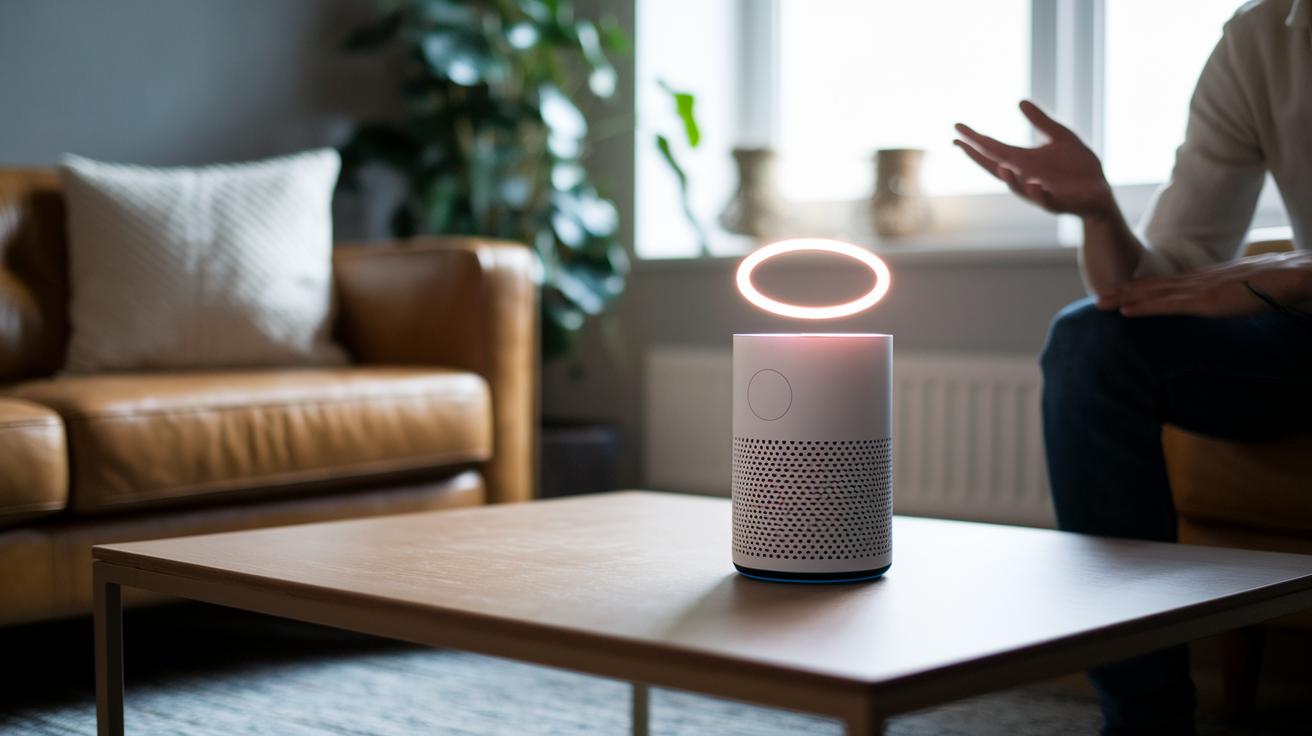
Smart speakers wake up when they hear words like "Alexa," "Hey Google," or "Siri." This simple trigger lets them start listening right away, much like a friend who answers when you call. For example, you can say, "Hey Google, set the thermostat to 72," and the speaker jumps into action immediately.
Inside, natural language processing (a tool that turns your speech into commands) breaks down your words so the device knows what to do. Even with background noise, it picks out your key instructions clearly. Imagine saying, "Play some upbeat jazz" on a calm morning or in a busy household, the speaker gets it both times.
Beyond answering questions, these devices help control your digital life. They can guide you through setting up a video call or stream your favorite songs. Say, "Play my workout playlist everywhere," and your speakers work together to fill every room with sound.
This quick response and multitasking show off solid voice recognition skills. They make it easy to control your playlists, manage streaming, or make hands-free calls, proving themselves to be trustworthy digital sound helpers in your home.
Smart Speakers and Home Automation: Connected Home Audio Guide
Smart speakers are not just voice helpers; they serve as the heart of your smart home. They work with tech like Thread (a system for device communication), Zigbee, and Matter, which lets them chat with many different smart devices. Say "Alexa, good night" and your speaker can tell your lights to dim, your thermostat to adjust, and even prompt your door to lock.
Integration is at the core here. Many of these speakers team up with systems like Philips Hue and Nest Thermostat, along with lots of other third-party devices. This means one simple command can adjust several settings at once. Think of it like a digital conductor making sure every part of your home works in sync.
They also offer a smooth multi-room audio experience. Whether you’re streaming your favorite tunes or getting a quick weather update, these speakers keep everything running together. They blend everyday comfort with smart tech, making your home easier to manage, all with just your voice.
Popular Smart Speaker Models: AI-Driven Sound Appliance Review

Smart speakers come in many shapes and prices that suit different needs. We looked at several models to see how they work day to day. The Amazon Echo Dot Max runs about $80–$100. It supports Thread and Zigbee (two methods to link smart devices), making it a solid pick for a connected home. Its mix of cost and performance shows how far digital sound systems have come.
If you want a speaker with loud, clear sound, the Echo Studio is a great option at roughly $189. It fills your room with deep bass and rich highs that bring your music and movies to life. On the other hand, the basic Echo Dot costs about $32 and gives you essential features without a big price tag.
Apple fans have a couple of good choices too. The HomePod (2nd Gen) offers tight Siri integration and polished sound, though it comes at a higher cost. If you prefer something more budget-friendly, the HomePod Mini at $99 is compact but still smart and easy to use.
Google also makes a strong play with the Nest Audio, priced around $70. It offers balanced sound and works well with voice commands for everyday tasks. Sonos joins the game with two models: the Era 100 at about $199, which delivers solid sound, and the Era 300 at around $379. The Era 300 even supports Dolby Atmos, meaning it fills your room with well-layered, room-filling sound.
For those who need a speaker on the move, the Sonos Move 2 is worth considering. At roughly $399, this portable model comes with a strong battery and great mobility, so you can enjoy your tunes anywhere.
We even tested simple voice commands like “Play jazz in the living room.” These tests show that each speaker blends smart connectivity with what you hear. In the end, smart speakers can be both helpful home assistants and impressive audio systems, meeting a wide range of needs.
Everyday Uses for Smart Speakers: Handsfree Music Control Overview
Smart speakers act as central hubs in your home, linking up with other devices and running complex routines. They sync with your calendar and smart home tools to perform multiple tasks at once. For example, say "Alexa, start my dinner party setup," and the speaker dims your lights, adjusts the thermostat, and starts a specially chosen playlist.
They also make kitchen tasks easier. With a smart display like the Echo Show 11, you can follow clear recipe steps, manage several timers at the same time, and quickly convert measurements. Imagine asking, "Hey Google, guide me through tonight’s dinner prep," and receiving easy, step-by-step help.
These devices go beyond simple commands. They connect with devices in their own ecosystem to manage schedules and control various gadgets, keeping every room in your home on the same page.
Benefits and Limitations of Smart Speakers: Voice-Activated Gadget Benefits

Smart speakers let you control tasks with your voice, which many people enjoy. Yet they have clear downsides. One issue is privacy. These devices have always-on microphones that might catch background conversation, like the noise at dinner, even if you never meant to share it. We rarely dig deep into this risk.
They also need a steady Wi-Fi connection to work. When the internet goes down, the speaker loses many of its features, so you may find yourself without the help you expect.
Another problem is brand lock-in. Most smart speakers keep you tied to one company, which makes it hard to mix and match gadgets like lights or thermostats later on. This can limit your options if you want to update or change your system.
Cons include:
- Always-listening microphones that raise privacy concerns
- Dependence on Wi-Fi that can lead to downtime
- Brand lock-in that stops you from mixing devices easily
- Uneven performance between cheaper and higher-end models
| Issue | Impact |
|---|---|
| Privacy risks | The speaker might pick up unwanted background sounds |
| Connectivity challenges | No Wi-Fi means many functions stop working |
| Ecosystem lock-in | Limits mixing with devices from other brands |
Final Words
In the action, we explored smart speakers from their basic definition to their role in home automation. We broke down voice command basics, digital assistant roles, and everyday handsfree functions.
We compared popular models and weighed practical benefits and drawbacks. Our guide showed what are smart speakers in real terms and how they can fit your daily routines. Enjoy the simplicity of smart living with clear, tested advice.
FAQ
What are smart speakers used for?
Smart speakers are used for playing music, setting timers, managing reminders, and controlling smart home devices with voice commands.
What are smart speakers for iPhone?
Smart speakers for iPhone work with Siri to stream music, control smart home gadgets, and manage tasks, linking your phone to a hands-free experience.
What are smart speakers Bluetooth?
Smart speakers with Bluetooth let you wirelessly stream audio from your phone or tablet, offering a simple way to play music without cables.
What are smart speakers app?
Smart speaker apps help you control device settings, update software, and use voice command features from your smartphone for easier management.
Google smart speakers
Google smart speakers use the Google Assistant to answer questions, play music, and manage smart home controls, connecting easily with Google services.
Do smart speakers require a subscription?
Smart speakers do not usually need a subscription for basic functions, but some music streaming services might require one for full use.
Can smart speakers play radio stations?
Smart speakers can play radio stations by streaming internet radio or apps like TuneIn, making it simple to listen to live broadcasts.
Portable smart speakers
Portable smart speakers combine voice assistant features with battery power and wireless connectivity, letting you bring smart audio and control anywhere.
What is the purpose of a smart speaker?
The purpose of a smart speaker is to offer hands-free control for music playback, smart home tasks, reminders, and information lookups through voice commands.
What are the disadvantages of smart speakers?
Smart speakers have drawbacks such as privacy concerns with always-listening microphones, dependence on internet connectivity, and sometimes lower audio quality compared to premium speakers.
What is the difference between a Bluetooth speaker and a smart speaker?
The difference is that a Bluetooth speaker only plays audio from connected devices, while a smart speaker also offers voice control, smart home integration, and digital assistant features.
Is Alexa a smart speaker?
Alexa is the digital assistant used in many smart speakers like the Amazon Echo, enabling voice control over music, reminders, and smart home tasks.