

Have you ever wondered if your smart speaker really lives up to what it promises? Many of us settle for regular sound without really knowing what makes the speaker tick. In this guide, we get down to work by comparing device specs, voice assistants, sound quality, and connectivity.
We look at small speakers that fit snugly in a corner and larger ones that can fill an entire room with rich sound. We break down the strong points and the drawbacks of each so you can pick the right one for your home.
Key Metrics for Comparing Smart Speaker Features
We use simple benchmarks to find the smart speaker that fits your needs. Our review focuses on five main areas: the device specs, voice assistant features, sound quality, connection options, and how the speaker fits into your setup alongside its price.
Device specs include size, weight, and basic system details. A compact unit like the HomePod Mini might suit small spaces, while a larger one like the Sonos Era 300 could offer more power in a bigger area. When checking voice assistants, we see if the speaker works with Alexa, Siri, or Google Assistant. This matters if you want to control your speaker by voice.
We also look at sound quality. Does the speaker deliver a full, wide sound like the Sonos Era 100, provide spatial audio with smart drivers, or offer deep, room-filling bass similar to the HomePod 2? Then, we test connectivity options such as WiFi, Bluetooth, and smart-home setups to ensure smooth integration with your other devices. Finally, we review how the speaker fits into different ecosystems and price ranges, helping you pick whether a budget-friendly Amazon Echo Dot (5th Gen) or a more upscale option like the Bang & Olufsen Beosound A1 works best.
Think of it like choosing the right tool from a toolbox, each factor plays a role when the task is clear. These benchmarks set the stage for our in-depth reviews of models like the Sonos Era 100 & 300, HomePod Mini & 2, Amazon Echo Dot, Bang & Olufsen Beosound A1, and JBL Authentics 300.
Smart Speaker Specifications Comparison
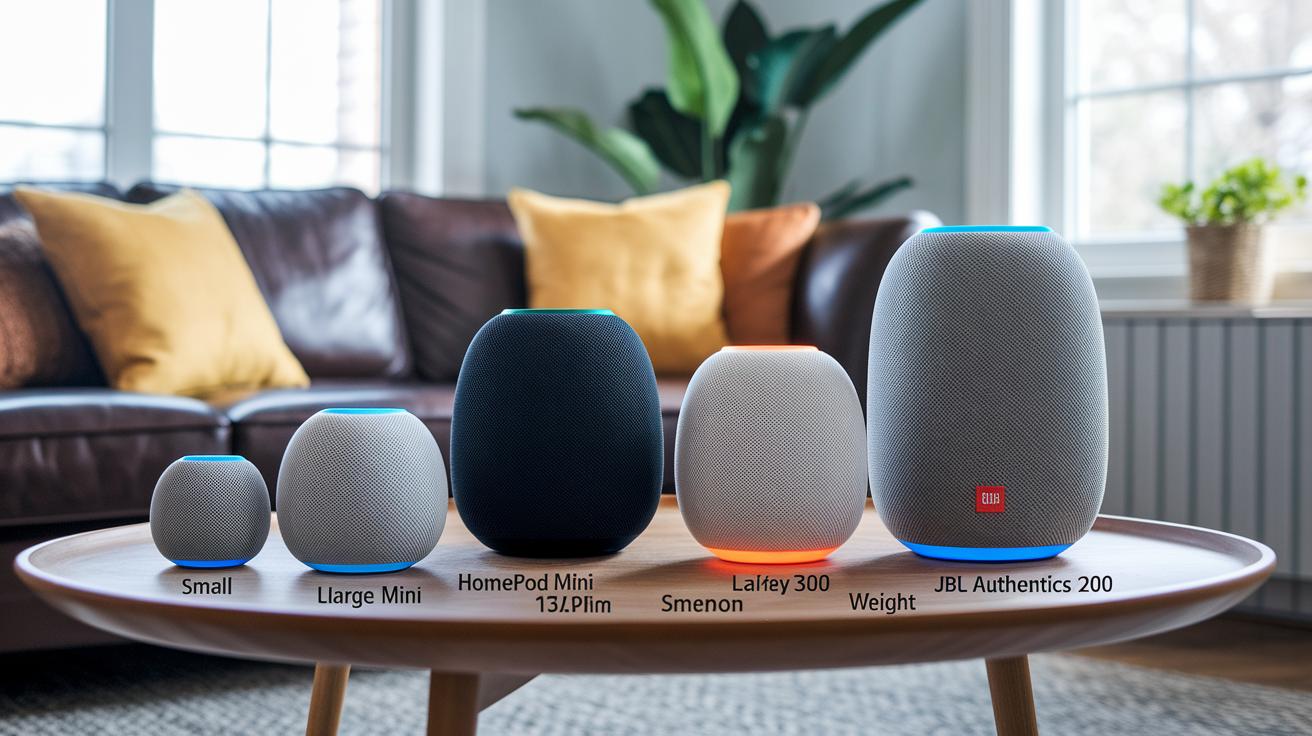
We've checked out seven smart speakers to see how they stack up in size, weight, and the system they use. This guide breaks down each device so you can quickly tell which one fits your space. Some models like the HomePod Mini are small and light, great for tight areas, while others like the JBL Authentics 300 are built larger to fill a room with sound.
The table below lists each speaker's dimensions in millimeters, weight in pounds, and its operating system (the software each one runs). For example, the HomePod Mini's compact design makes it perfect for small setups, while the heavier Sonos Era 300 might work best if you already have other Sonos gear at home. Knowing the operating system (like Sonos OS or Android-based firmware) helps you understand the kind of features and integration to expect.
| Model | Dimensions (W×H×D) | Weight | Operating System |
|---|---|---|---|
| Sonos Era 100 | 112×110×138 mm | 1.7 lbs | Sonos OS |
| Sonos Era 300 | 179×138×124 mm | 5.8 lbs | Sonos OS |
| HomePod Mini | 84×98 mm | 0.76 lbs | HomePod OS |
| HomePod 2 | 172×142 mm | 5.5 lbs | HomePod OS |
| Echo Dot (5th Gen) | 100×100×89 mm | 0.76 lbs | Alexa firmware |
| Beosound A1 (2nd Gen) | 133×68×48 mm | 1.9 lbs | OpenSonos |
| JBL Authentics 300 | 210×156×112 mm | 5.5 lbs | Android-based |
This side-by-side view helps you see the real differences in build and software. It makes it easier to pick the right smart speaker for your room and needs.
Smart Speaker Voice Assistant Comparison
We looked at several smart speakers to see how they perform with voice commands. We checked how fast they reply, how well they catch wake words (the signal word that starts them), how they deal with background noise, what languages they support, and how many commands they recognize. Clear, quick answers matter, especially when you manage your smart home. It really helps if the speaker can understand different voices even when there's noise around.
• Echo Dot (5th Gen): Uses Alexa. It answers quickly, catches wake words accurately, and works well even with some background noise. It also controls many smart home devices.
• Google Nest/Home: Runs on Google Assistant. It offers speedy replies and a strong set of language options. Its noise handling is great, so you can enjoy it during movie nights. For more details, visit smart speakers with google assistant.
• HomePod Mini & HomePod 2: These use Siri. They respond acceptably in quiet places, but they struggle with noise and have fewer language choices.
• Sonos Era speakers: They do not include a built-in voice assistant. You have to use a mobile app or an external voice tool to control them.
• Beosound A1 (2nd Gen): Features Alexa with a premium build. It picks up wake words clearly and handles noisy settings with ease.
• JBL Authentics 300: Supports both Alexa and Google. It automatically detects the right service to use, offers steady wake word detection, and handles background sounds well while providing a wide range of commands.
Smart Speaker Audio Performance Comparison
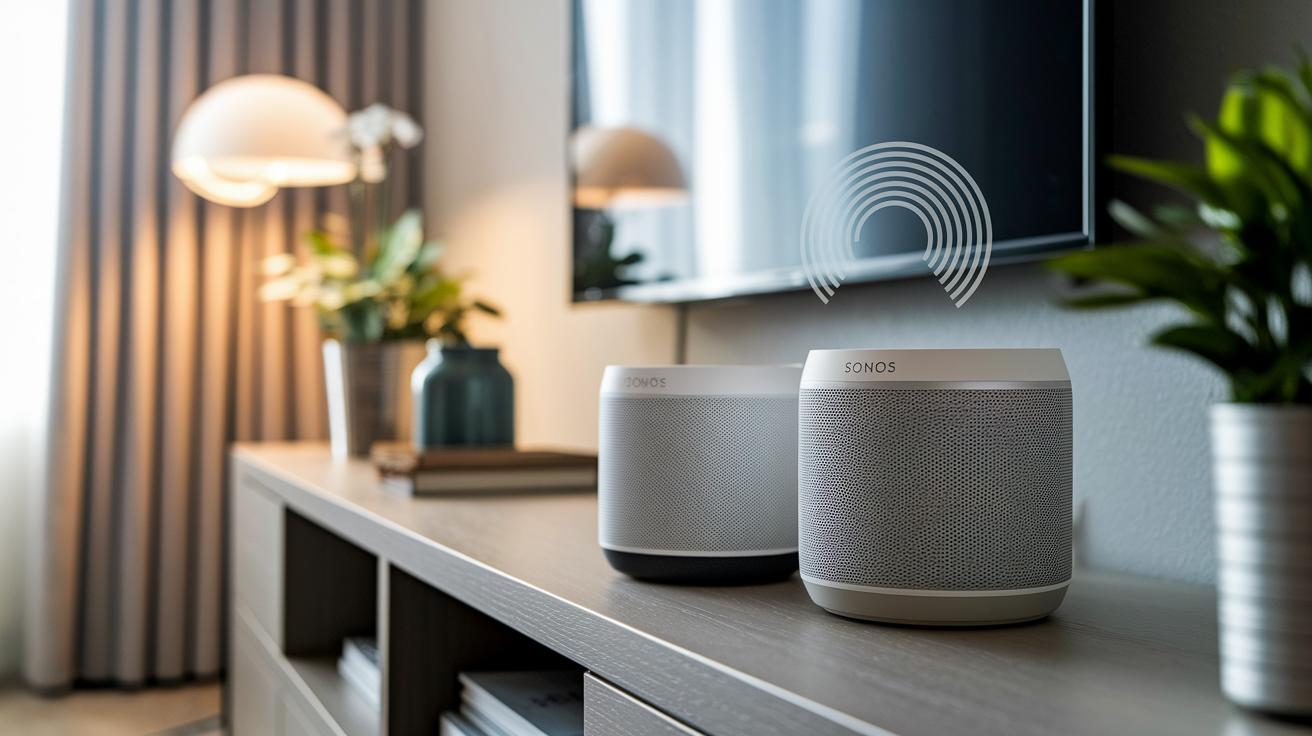
We ran tests on each speaker using steady benchmarks to see how they perform in real life. We checked sound clarity, balance in different pitches, and how each speaker handles volumes using a looping audio track. Think of it as testing whether your favorite song sounds crisp and even. In one test, we played a mix of acoustic guitar and vocals at a level similar to everyday room lighting (150 nits) to mimic typical conditions. This approach shows how each speaker manages broad, lively sounds as well as personal listening needs. It also reveals how they handle deep bass and high notes.
Every speaker has its own focus. The Sonos Era 100 delivers an open, room-filling sound with balanced mids that spread easily across a space. The Sonos Era 300 stands out with its smart directional drivers that add a sense of depth to both music and movies. The HomePod 2 fills big rooms with rich sound and deep bass. Despite its small size, the HomePod Mini offers impressively rich sound. The Echo Dot gives a broad sound, which is great for its budget price. The Beosound A1 hits clear highs with punchy mids, and the JBL Authentics 300 lets you fine-tune the sound to emphasize mid-tones.
No single speaker wins in every category. Each one shows its own strengths, letting you pick the speaker that best fits your room size and sound taste.
Smart Speaker Connectivity Comparison
Smart speaker connectivity makes a big difference in how well your system works. Every speaker has its own strengths. For example, the Echo Dot keeps a steady link thanks to its dual-band WiFi (it uses two WiFi frequencies for a stable connection) and Bluetooth LE (low energy) support. Google Nest/Home, on the other hand, combines dual-band WiFi with a built-in Chromecast for smooth streaming.
The Sonos Era uses its own mesh network and works with AirPlay 2 (Apple's wireless streaming tech) so you can share music easily. HomePod speakers use UWB Handoff (a fast transfer method) along with secure HomeKit integration to keep your connection safe all over your home. The Beosound A1 uses Bluetooth 5.1 and aptX (a codec that helps keep sound clear) to deliver crisp, continuous audio. Finally, JBL Authentics 300 brings strong WiFi together with Bluetooth multipoint (letting you connect several devices at once) for a handy mix of speed and reliability.
WiFi is key for handling heavy data loads and streaming without breaks. Bluetooth is simple and works best at short range, making it good for connecting personal devices. Some speakers mix both features. The JBL Authentics 300, for instance, uses WiFi to stream content and Bluetooth to quickly connect nearby devices.
Together, these networking options help your speakers fit right into your smart home. They create a smooth, unified experience when linked to a smart home control panel or other automation hub.
Smart Speaker Pricing and Compatibility Comparison
Smart speakers break down into clear price groups. The Echo Dot (5th Gen) is the cheapest at $49, while the HomePod Mini sits at $99 for an entry-level choice. Mid-range models like the Sonos Era 100 and Beosound A1 cost around $250, with the HomePod 2 a bit higher at $299. For lovers of high-end gear, the Sonos Era 300 tops out at about $450, and the JBL Authentics 300 comes in around $399.
Each speaker is made for a different kind of smart home. The Sonos Era series works best if you already own Sonos speakers. The HomePod Mini and HomePod 2 fit perfectly with an all-Apple setup, syncing easily with iOS and HomeKit. The Echo Dot is a solid pick if you want wide Alexa support for a flexible smart home. Meanwhile, both the Beosound A1 and JBL Authentics 300 support Alexa, and the JBL even adds Google support to mix things up.
Pick the speaker that fits your current devices and budget best.
Final Words
In the action, we broke down key metrics, from device specifications and voice assistants to audio performance, connectivity, and pricing. We ran through side-by-side comparisons so you can see which smart speaker fits your setup. Each section offered clear, test-driven insights to help avoid costly mistakes.
This smart speaker features comparison gives you the facts needed to make a confident, low-risk decision. We trust these practical insights will point you in the right direction and boost your enjoyment of a well-matched audio solution.
FAQ
What is a smart speaker?
The smart speaker is a voice-activated device that plays music, answers questions, and controls home gadgets using built-in assistants and wireless connections.
Which smart speaker is best for music?
The best smart speaker for music delivers rich, clear sound with balanced mids and deep bass. Options like the Sonos Era speakers and HomePod 2 are tested to provide immersive audio experiences.
What are the best portable smart speakers?
The best portable smart speakers combine lightweight design with robust sound output. Models such as the Beosound A1 (2nd Gen) are designed for users who need ease of transport along with quality audio.
What does a smart speaker features comparison chart include?
A smart speaker features comparison chart outlines key factors like device specs, voice assistant integration, audio performance, connectivity methods, and pricing tiers, offering a clear side-by-side view for easy decision making.
Which smart speaker has a built-in screen?
Smart speakers with screens present visual information alongside audio control. They display features like lyrics, timers, and interactive menus, enhancing user engagement in multi-tasking environments.
Which smart speaker best supports privacy?
The smart speaker best supporting privacy focuses on data controls and limited information sharing. It includes clear privacy modes and transparent policies so users can better protect personal conversations.
What are the Sonos smart speaker options?
The Sonos smart speaker lineup, like the Era 100 and Era 300, emphasizes excellent audio quality and robust design. They do not have built-in voice assistants, making them ideal for users seeking premium sound.